






Ketone Boost: Stärker. Schneller. Länger.
-

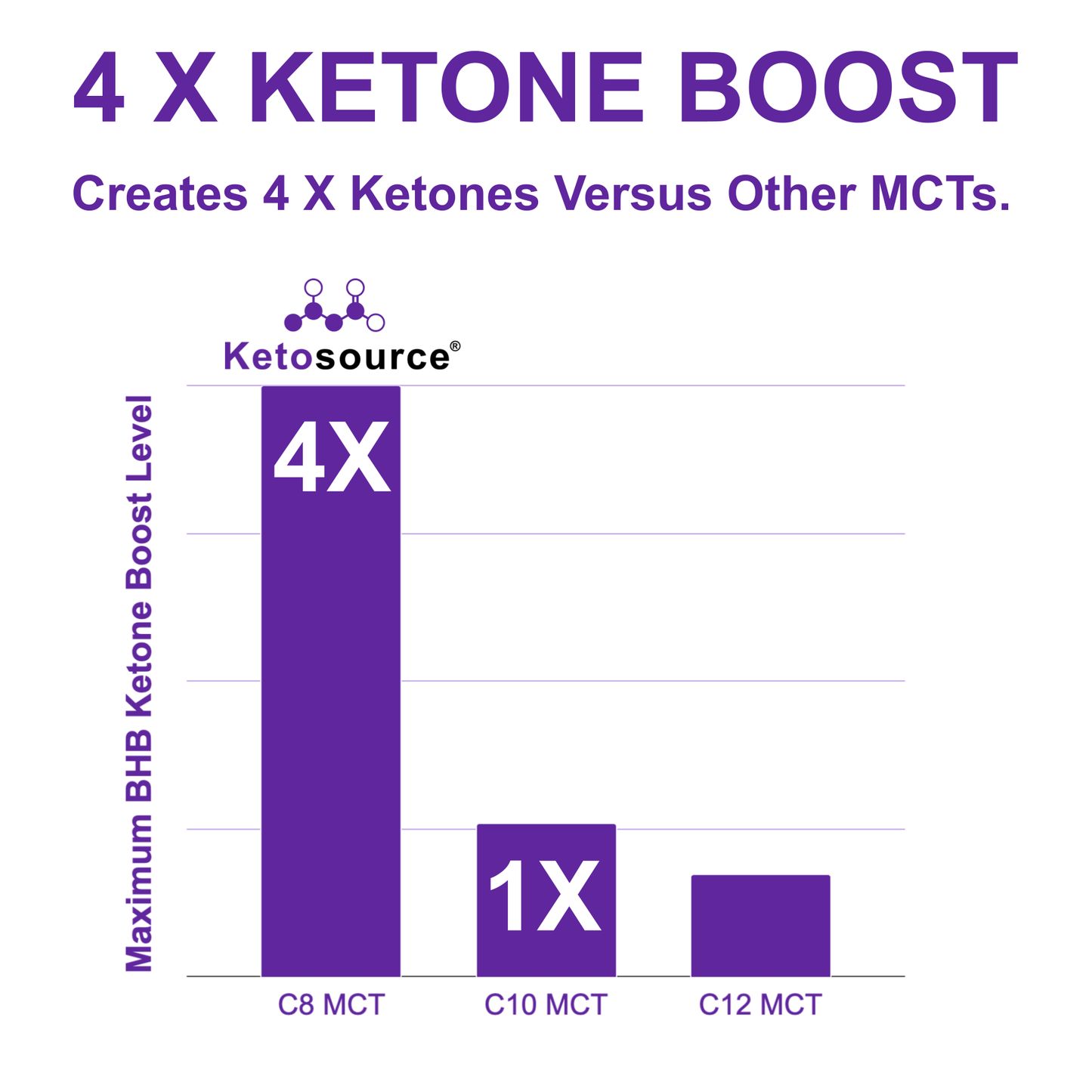
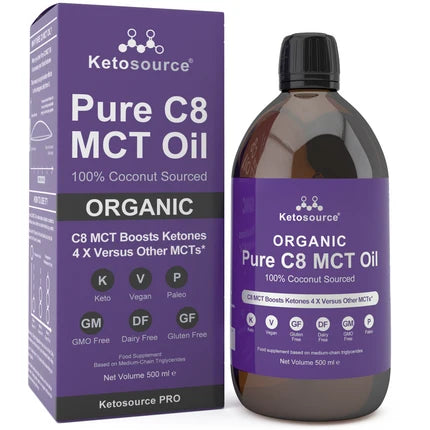
4 x Ketone Boost
◉ C8 MCT erzeugt 4 x mehr Ketone als andere MCTs wie C10 und C12.
◉ Gemischte MCT-Öle enthalten eine Mischung aus MCTs, darunter C8, C10 und C12.
◉ Da gemischte MCT-Öle weniger C8 enthalten, erhöhen sie den Ketonspiegel in geringerem Maß. -

1 Stunde bis zur Ketose
◉ Die Keto-Diät, Fasten und MCT-Öle versetzen dich in die Ketose.
◉ C8 MCT versetzt dich innerhalb von 1 Stunde in die Ketose.
◉ Das bedeutet, es ist 21-mal schneller als Fasten und 46-mal schneller als die Keto-Diät.
-

2 Stunden in Ketose
◉ Sobald du in Ketose bist, hält dich Reines C8-MCT etwa 2 Stunden lang dort.
◉ Du kannst C8 MCT dreimal täglich einnehmen, um deine Ketone zu erhöhen und in die ernährungsbedingte Ketose zu gelangen.


Reinheit. Ein höherer Standard.
-

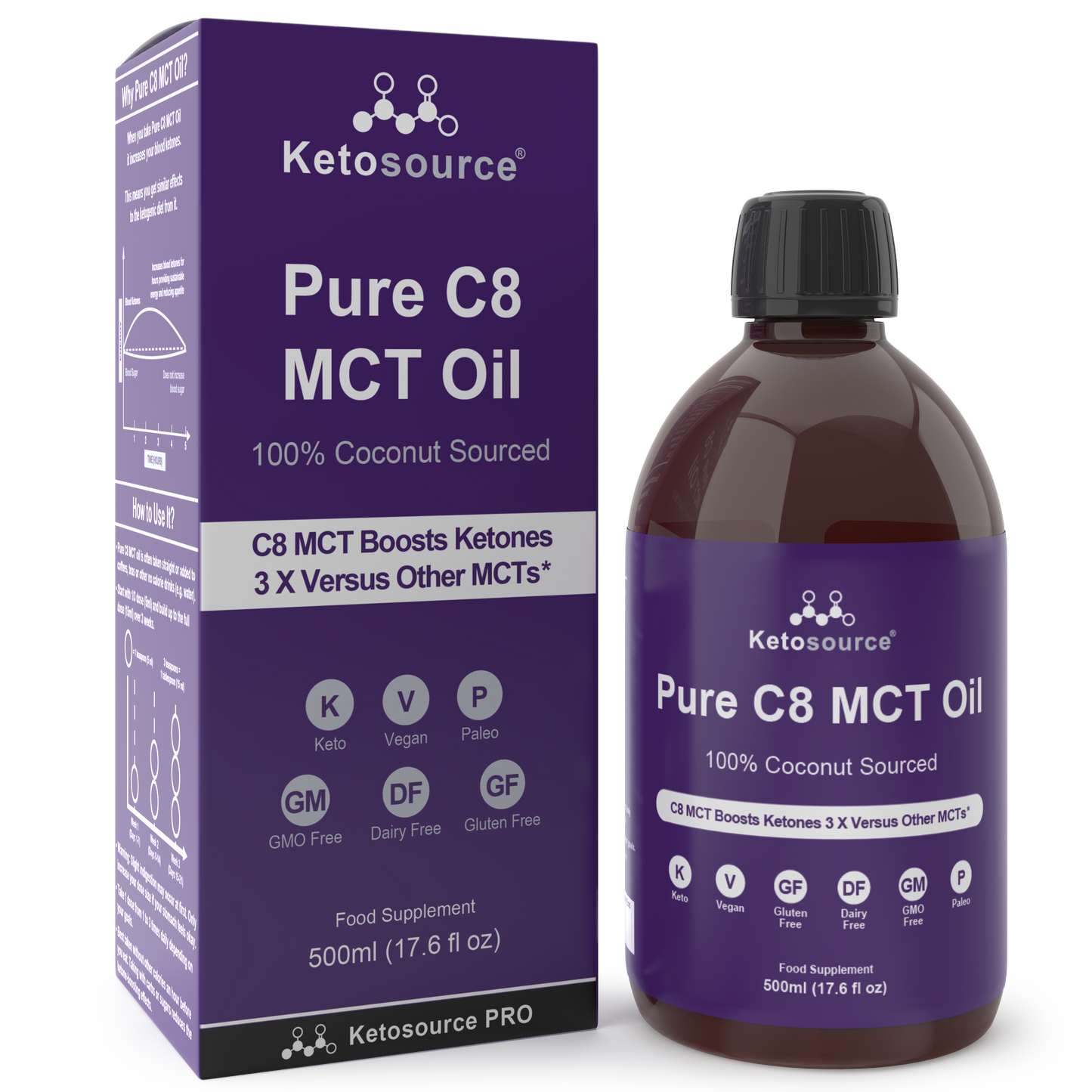
99%+ reines C8-MCT-Öl
-

Von unabhängigen Laboren getestet
-

100 % aus Kokosnuss gewonnen


Was drinsteckt
-

Alles, was du brauchst. Nichts, was du nicht brauchst.
◉ Dinge, die du willst
- Wirkstoffreinheit. Reines C8-MCT-Öl hat den höchsten Reinheitsgrad des aktiven, ketonfördernden Inhaltsstoffs C8 MCT.
◉ Dinge, die du nicht willst
- Keine zugesetzten synthetischen Inhaltsstoffe
- Keine versteckten Kohlenhydrate
- Keine Lösungsmittel oder anderen Schadstoffe- Keine Schwermetalle
- Keine mikrobielle Kontamination
-

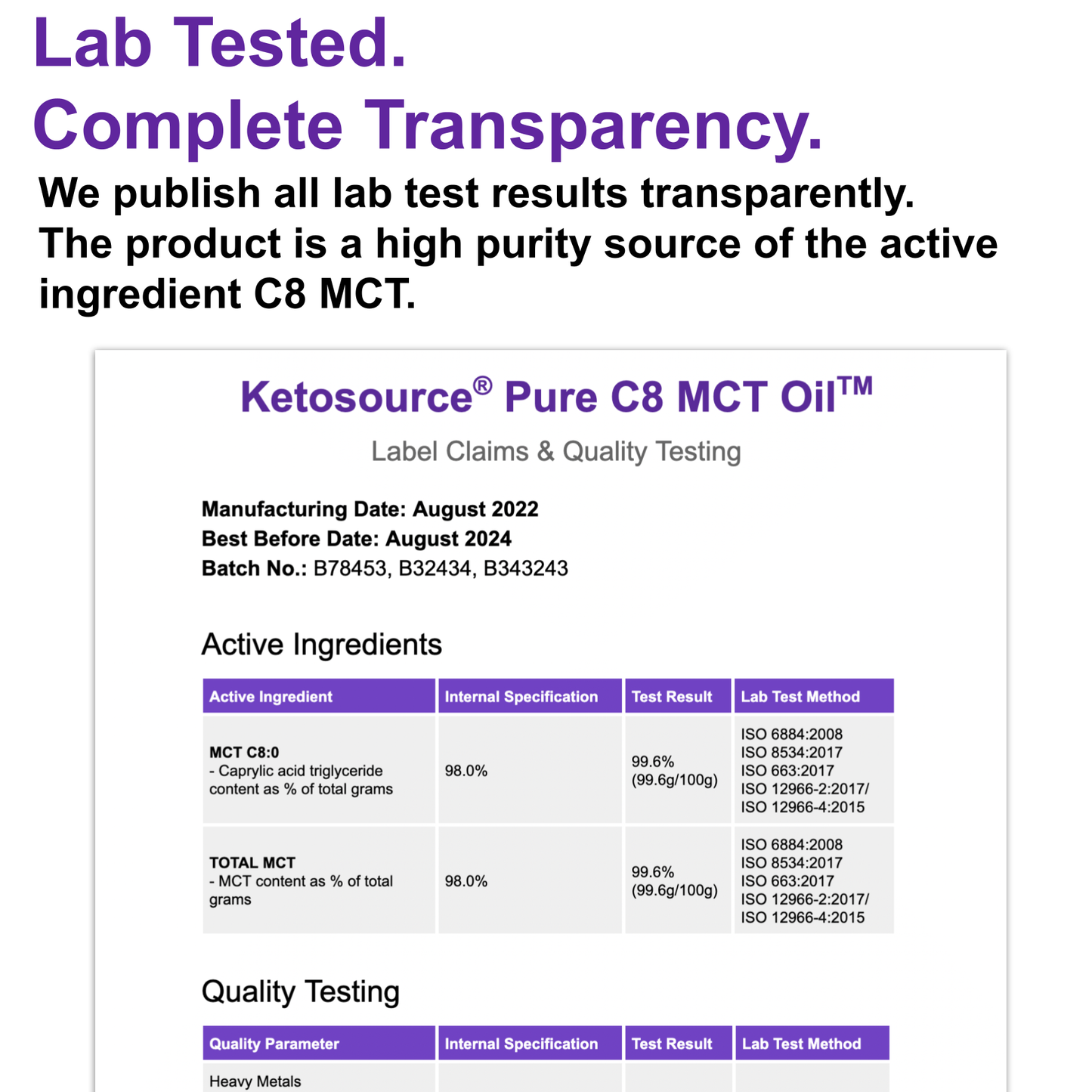
Bestanden oder nicht, wir veröffentlichen es
◉ Das zeigen dir fast keine Marken
Fast keine Nahrungsergänzungsmarke veröffentlicht ihre Laborergebnisse. Wir veröffentlichen jede Charge, auch die, die unvollkommen ausfallen.◉ Jede Charge, vollständig veröffentlicht
Reinheit, Schwermetalle und Mikroben, getestet von Eurofins nach ISO 17025. Finde deine Charge über die Chargennummer auf transparency.ketosource.co.


Unabhängige Laborergebnisse

So nimmst du es ein
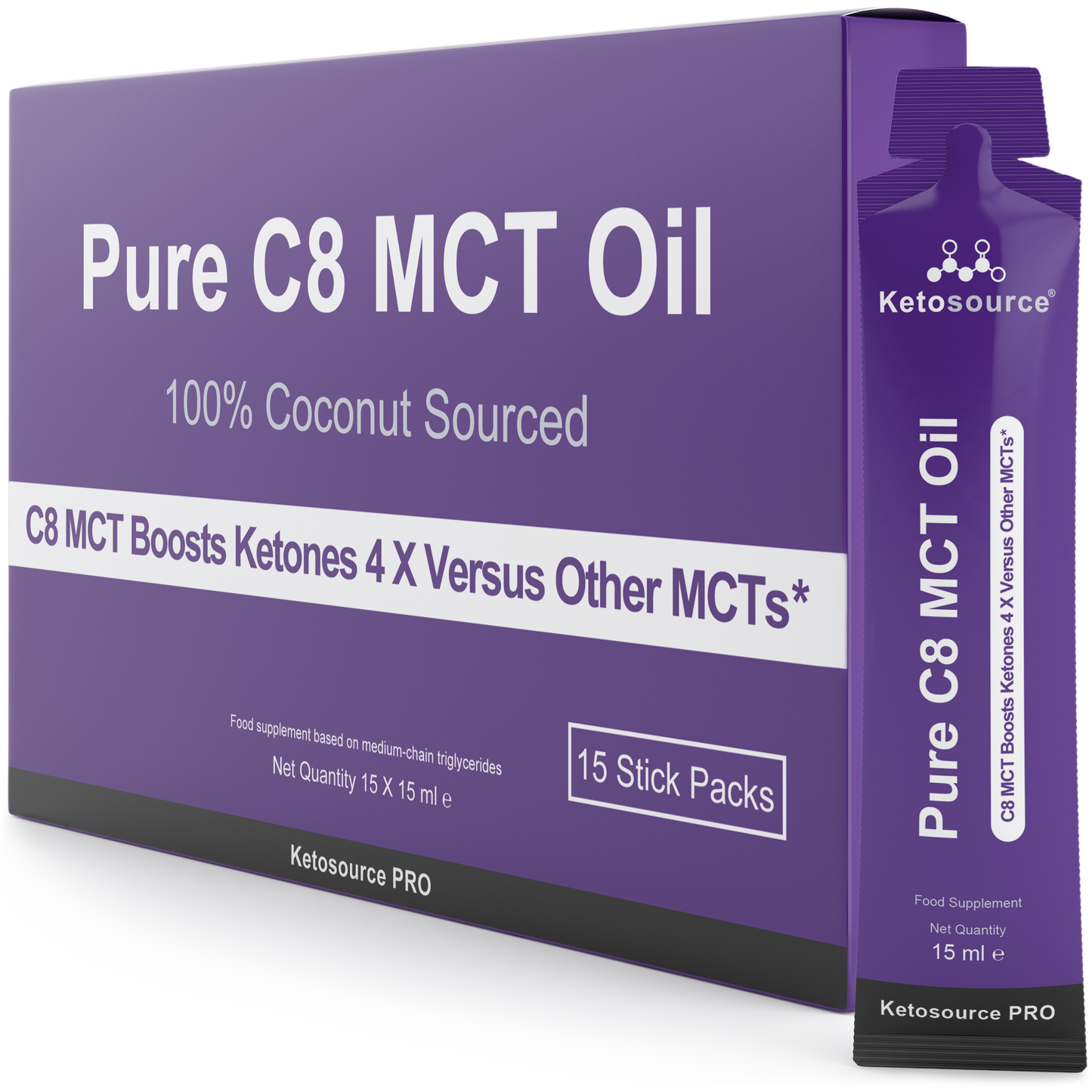
◉ Beginne mit 1/3 der Dosis (5 ml) und steigere dich über 3 Wochen auf die volle Dosis (15 ml).
◉ Nimm je nach deinen Zielen 1- bis 3-mal täglich eine Dosis ein.
◉ Warnung: Zu Beginn können leichte Verdauungsbeschwerden auftreten. Erhöhe deine Dosis nur, wenn sich dein Magen gut anfühlt.